Step 1
Load the buffer
Ingest 0.3g/kg sodium bicarbonate 60–90 minutes before effort.

What 23 expert sources agree on
Sources broadly agree sodium bicarbonate buffers exercise acidosis and can help short (1-7 min) repeated high-intensity efforts when individually dosed and tested, but the article's central claim — that the benefit does not translate to continuous running — is supported by the strongest meta-analytic evidence.
Where they disagree
Earlier meta-analyses and the Maurten/elite-athlete narrative suggest broader ergogenic value, while the most recent running-specific meta-analysis finds negligible benefit for continuous running once publication bias is corrected.
The Infoluenced Index weighed 41 expert sources to score this article.
If you're a mid-distance runner hunting seconds in the 800m or 1500m, sodium bicarbonate might be the marginal gain you're after. According to Jeff Gaudette, co-founder of RunnersConnect and former Olympic Trials qualifier, research shows a 1.5% performance improvement in high-intensity efforts lasting 45 seconds to 8 minutes — roughly equivalent to caffeine. But if you're marathon-bound, the story flips: the Pinto 2025 meta-analysis found that after correcting for publication bias, continuous running shows an effect size of just 0.18, with nearly 30% of users suffering GI distress versus 2.6% on placebo. The headline hero stat comes from cycling, not running. Know your event before you open the tub.
Keely Hodgkinson took Maurten's Bicarb System before her 800m gold at the Paris 2024 Olympics, per Athletics Weekly reporting. Her coach Trevor Painter told Athletics Weekly: "We've not seen any gastro problems — so now you get all the benefits without the negative side effects — I couldn't recommend it strongly enough." That is a mid-distance story. Manufacturer Maurten attributed its Bicarb System to Sebastian Sawe's sub-2 marathon, per Maurten's own race-day account and NutraIngredients reporting. However, Sawe's result came alongside a complex high-carb protocol; the bicarb's isolated contribution was not established, and the Pinto 2025 meta-analysis concludes that single-dose bicarb offers negligible benefit for continuous running. If your event is a marathon, this almost certainly isn't doing what you think it's doing.
Experts agree bicarb buffers short efforts; the marathon evidence is negligible.
Test tolerance during a hard time trial or interval session. Have bathroom access.
If multi-day loading, take split dose with dinner.
Consume single dose with water or hydrogel; set a timer.
Passive rest and rehydrate; blood bicarbonate rebounds in ~45 min.
Leave the bicarb at home; the evidence doesn't support it.
Multiply your body weight in kg by 0.3g to get your single-dose target.
Take the full dose before a hard time trial or interval session 4–6 weeks pre-race.
Consume 60–90 minutes before your effort, or at your personal ITTP if known.
If using hydrogel, stir and let the gel form fully before drinking.
Rate nausea, cramping, and bloating on a 0–10 scale during the session.
Use bicarb only for high-intensity efforts lasting 1–8 minutes.
For continuous running over 30 minutes, leave the bicarb at home.
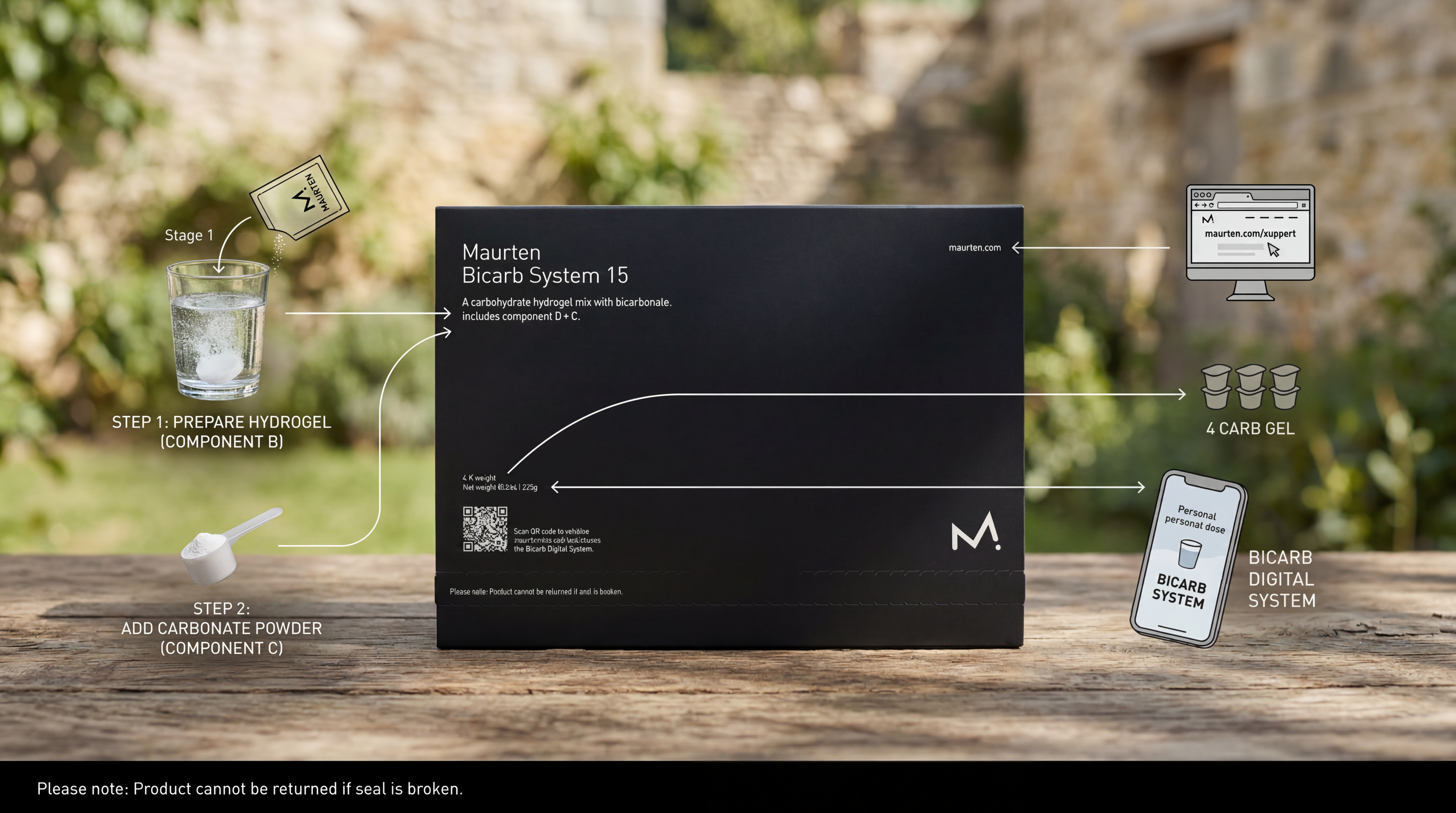
The hydrogel format used by multiple Paris 2024 track medallists; associated with reduced GI distress in cycling trials.
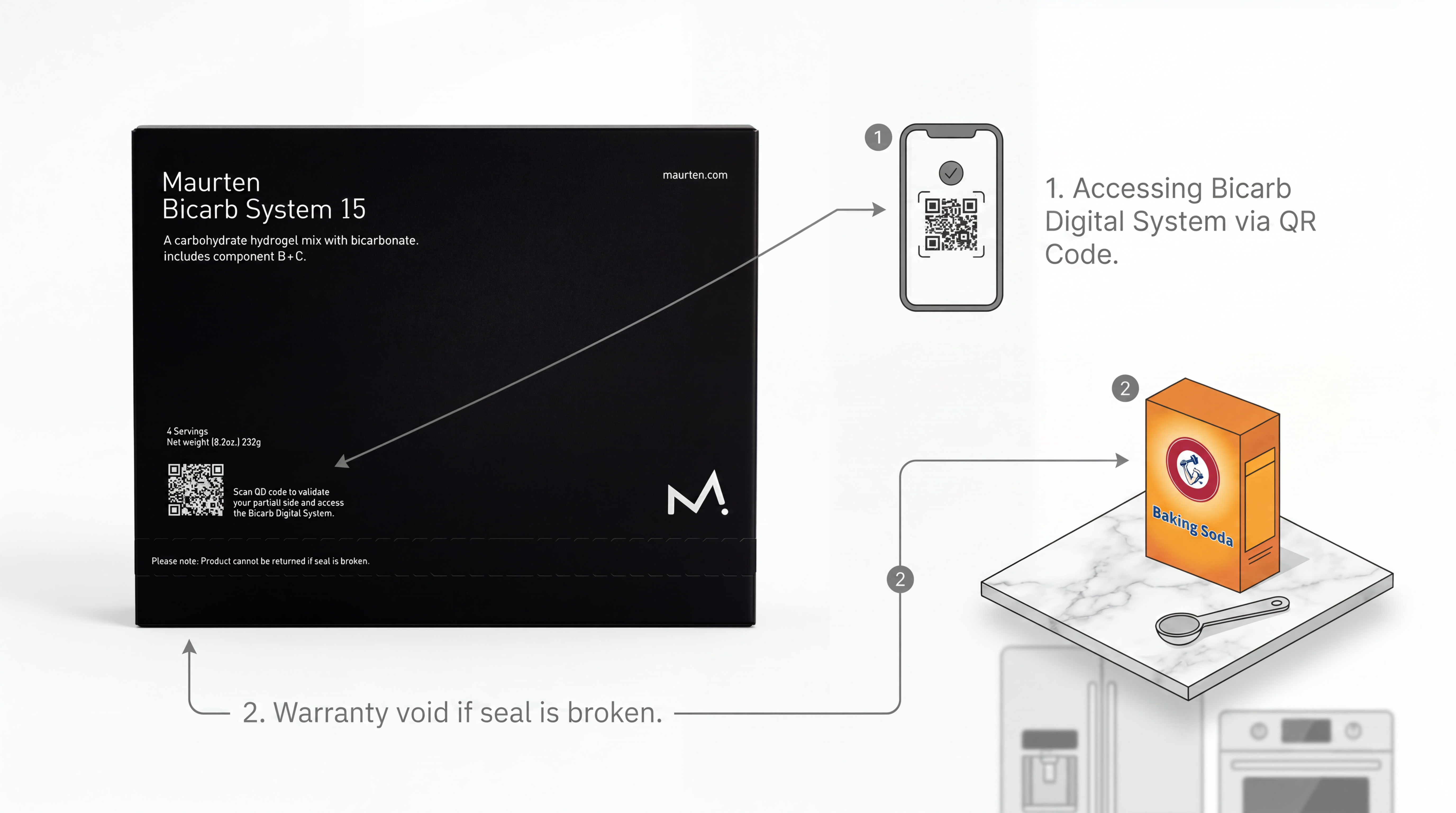
Identical ergogenic potential at the lowest cost; best for athletes with iron-clad stomachs.
Designed to bypass stomach acid; a middle-ground option for gut-sensitive athletes.
Quick answers

